
Do Car Stackers Need WorkSafe Approval? Car Stackers vs Workshop Hoists
Is a car stacker WorkSafe approved? Here's what the rules in Victoria and NSW actually say, and how a parking stacker differs from a workshop vehicle hoist.
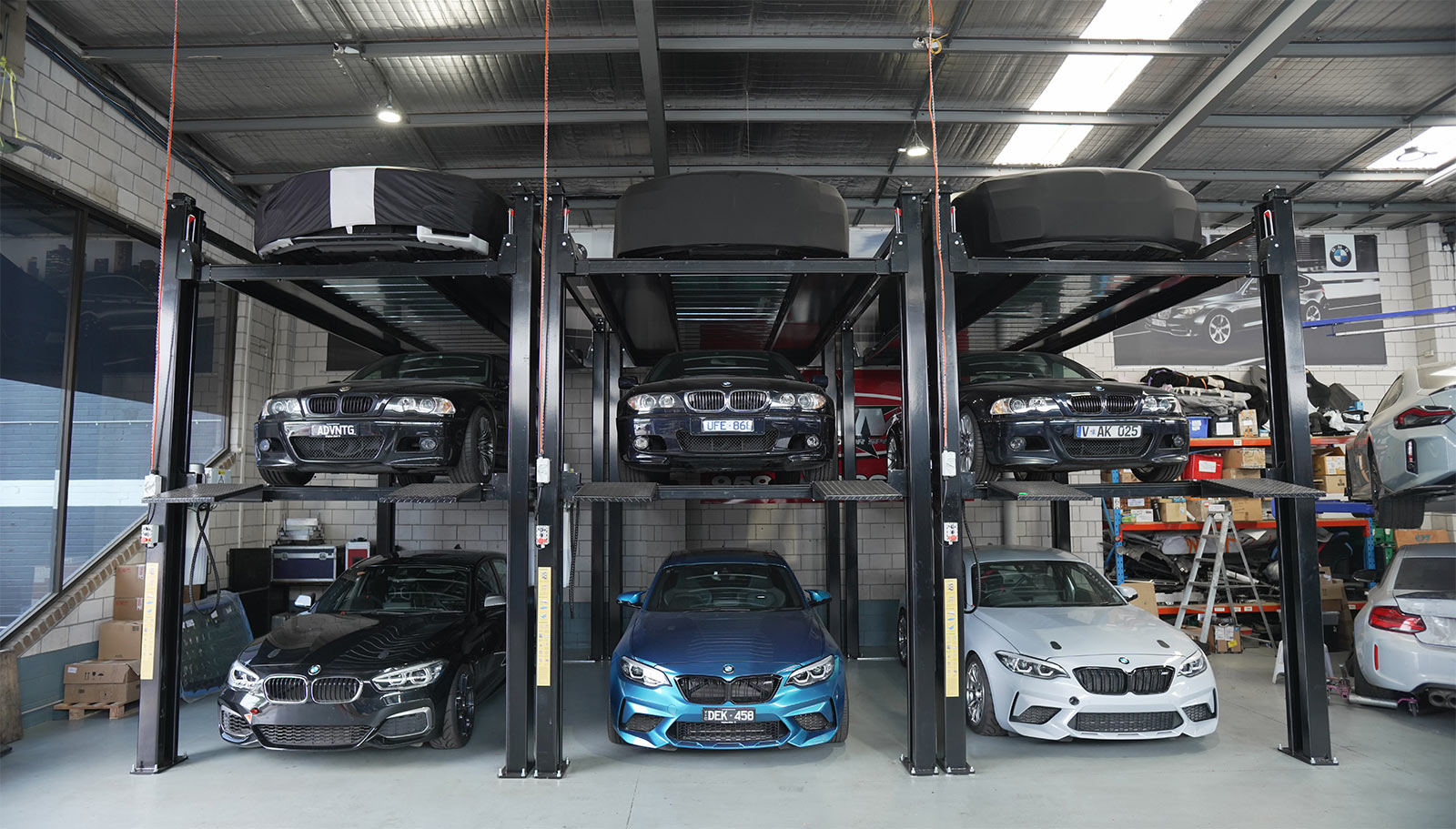
It's one of the questions we're asked most: "Is your car stacker WorkSafe approved?" It's a sensible thing to ask, but the answer starts with a common misunderstanding.
The short answer
- Safety regulators like WorkSafe Victoria and SafeWork NSW don't approve individual products.
- What they do require is design registration for certain types of plant, and vehicle hoists are on that list in both states.
- A vehicle hoist is defined by its purpose: lifting a vehicle so work can be done on it. A car stacker built only for parking is designed for something different.
- Car stackers are still covered by workplace safety laws when they're used in a workplace.
What is design registration?
Australia's workplace safety laws require the design of certain high-risk plant to be registered with a safety regulator before it's used at work. Lifts, tower cranes, boom-type elevating work platforms and vehicle hoists are all on the list.
Car stackers and car parking systems aren't named on the list in Victoria or NSW. So the key question is whether a car stacker counts as a vehicle hoist.
What the rules say in Victoria
Victoria's list of plant needing design registration is in Schedule 2 of the Occupational Health and Safety Regulations 2017, and appears on WorkSafe Victoria's website. Vehicle hoists are on it. Car stackers aren't.
The regulations define a vehicle hoist as a hoist permanently installed at a workplace to elevate a vehicle to allow work to be performed on the vehicle. A stacker designed only for parking and storing vehicles isn't built for that purpose.
What the rules say in NSW
NSW follows the national model work health and safety laws. Vehicle hoists are listed in Schedule 5 of the Work Health and Safety Regulation 2025 as plant whose design must be registered with SafeWork NSW.
The regulation defines a vehicle hoist as a device to hoist vehicles designed to give access for under-chassis examination or service. Again, the focus is on working under or on the vehicle, not parking it.
What one regulator has said directly
WorkSafe Victoria and SafeWork NSW haven't published guidance specifically about car stackers that we could find. Western Australia's regulator has. Its October 2025 information sheet states that car stackers are not classified as a registrable item of plant in WA, and that they are not designed to be used as a vehicle hoist.
WA uses the same national model definition of a vehicle hoist as NSW, so it's a useful guide to how regulators view car stackers. If you need certainty for your site, check with your state's regulator.
Car stacker vs workshop hoist
- Purpose: a car stacker stores vehicles. A workshop hoist lifts a vehicle so people can work on it.
- People: with a car stacker, you park, get out and operate it from outside. A workshop hoist is designed for people to work underneath a raised vehicle.
- Design standards: WorkSafe WA refers to AS 5124:2017 for power-driven parking equipment. Workshop vehicle hoists are covered by AS 1418.9.
- Design registration: required for vehicle hoists in Victoria and NSW. Car stackers aren't on either state's list.
- Use: a car stacker must never be used as a workshop hoist for underbody inspections or servicing.
Car stackers are still covered by safety laws
No design registration doesn't mean no rules. In a workplace, the general duties in Victoria's and NSW's safety laws still apply to car stackers like any other plant. WorkSafe WA's guidance gives a practical picture of what that means:
- The business or person in control: must manage the risks, display operating instructions, train users and keep it inspected and maintained.
- Importers and suppliers: must make sure the car stacker has been tested to confirm it's safe, and provide information on risks and safe use.
- Installers: must install and commission it safely.
- Inspection and maintenance providers: must make sure their work and advice are adequate.
WorkSafe WA also says inspection and maintenance should follow the manufacturer's recommendations, or a competent person's recommendations where those aren't available. If neither can reasonably be followed, inspections and maintenance should be done at least annually.
What about stackers at home?
Workplace safety laws apply to workplaces, so the duties above are aimed at businesses. At home, it still makes sense to follow the same good practice: use the stacker only as intended, follow the manual and keep it maintained. Depending on your project, building or electrical work may also need approvals, so check with your builder, building surveyor or local council.
Questions to ask any car stacker supplier
- Is it designed and supplied as a parking system or as a workshop hoist?
- What design standard does it follow?
- Will it have a permanent name plate with the manufacturer, model, serial number and rated capacity?
- Will you receive operating instructions and a maintenance schedule?
- Who will install and commission it?
If you need to work underneath vehicles, you need a vehicle hoist designed for that purpose, not a car stacker.
Have a question about your project?
Regulations can change, and other states have their own rules. If your situation is unusual, check with WorkSafe Victoria, SafeWork NSW or your state's regulator. If you have questions about a Leverage Lifts car stacker, get in touch.
This article is general information based on publicly available legislation and regulator guidance as at November 2026. It isn't legal advice.

Ready to Unlock More Space?
Tell us about your project and we'll recommend the right car lift solution for your needs.